Update Windows 7 To Windows 10
Posted : admin On 27.05.2020Discus and support Updating from windows 7 to windows 10 in Windows 10 Installation and Upgrade to solve the problem; i am trying to update my virtual parallels machine on my mac from windows 7 to windows 10 and i keep getting the following error; 0xC1900101-0x2000D.. Discussion in 'Windows 10 Installation and Upgrade' started by MichaelKornitschuk, Oct 1, 2019 at 3:22 AM.
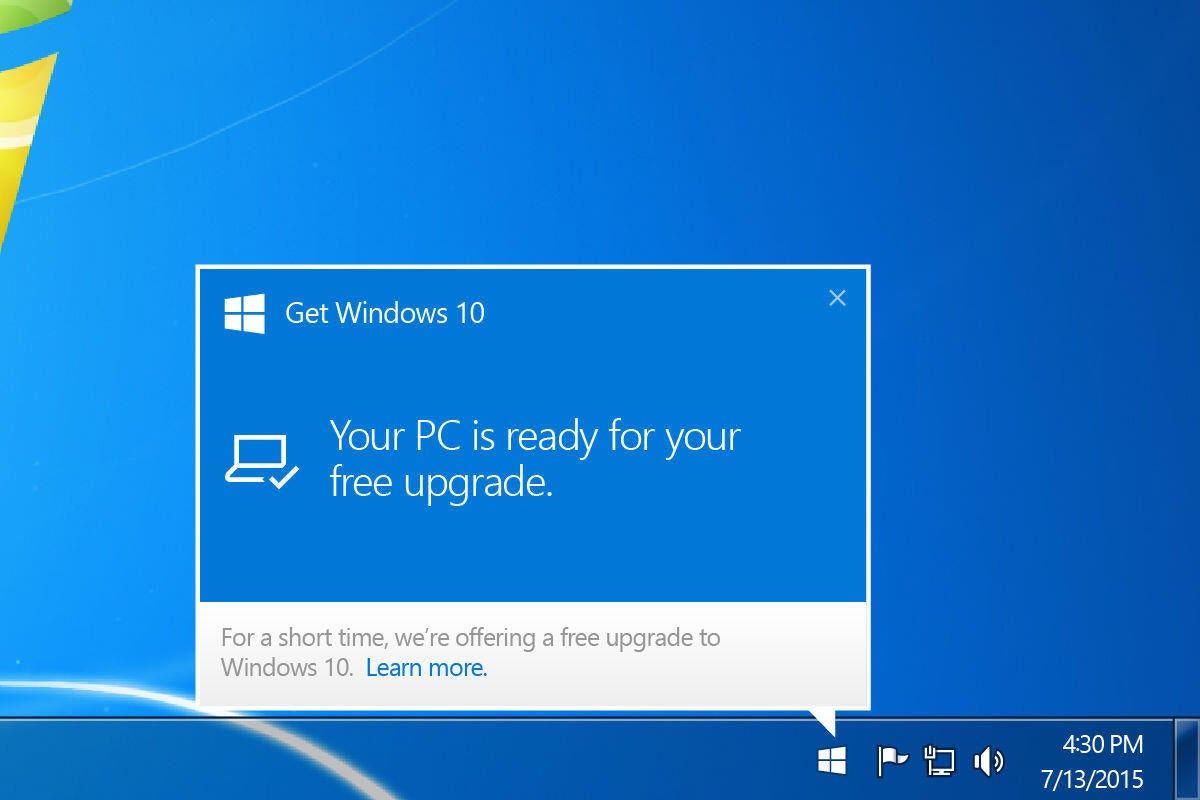
Sep 27, 2019 Upgrade from Windows 7 to Windows 10 I have a Toshiba laptop that had been updated from Windows 7 to Windows 10. I had to do a recovery and the laptop went back to the status it had right out of the box. That is Windows 7 with no other apps. I updated Windows 7 with all of the latest updates and installed IE 11. I then used the automatic. 22 hours ago Why don’t I have the Get Windows 10 app? If you don’t see the Get Windows 10 app on your PC, it might be because. Your device isn’t up-to-date with at least Windows 7 SP1 or Windows 8.1 Update. Windows Update is turned off or is not set to received updates automatically. Jan 25, 2015 How to update Windows 7 or 8 to Windows 10 using Windows Update. By Martin Brinkmann on January 25, 2015 in Windows - Last Update: July 05, 2017 - 43 comments. The only options you had previously to upgrade from an older copy of Windows to a new one was to run the installer either while the installed operating system was running or by booting. The site cannot determine which updates apply to your computer or display those updates unless you change your security settings to allow ActiveX controls and active scripting. The best way to do this without lowering your security settings is to make this site a trusted website. Windows 10 is finally here and it's the best version of the operating system we've seen in a while. Even better, it's a free update if you already have Windows 7 or newer. The new operating system. You can manually check for Windows 7 updates (to fix software bugs and security flaws) at any time. Although automatically checking for updates is the recommended setting, if you change Windows 7 Update to never check for updates, you need to periodically check for updates manually.
Updating from windows 7 to windows 10 - Similar Threads - Updating
Unexpected kernel mode trap, kernel security check failure after live update.
in Windows 10 BSOD Crashes and DebuggingUnexpected kernel mode trap, kernel security check failure after live update.: Laptop rebooted itself with these messages: Unexpected kernel mode trap, kernel security check failure after live update.To avoid this reboot process I had to press F-12 to boot from my hard drive and this problem exists every time I turn my laptop on.Sometimes the..Xbox One Preview Alpha ring 1911 System Update 190930-1945 - Oct. 2 Xbox
in Windows 10 NewsXbox One Preview Alpha ring 1911 System Update 190930-1945 - Oct. 2 Xbox: [ATTACH]Hey Alpha ring users! Today’s Xbox Insider Release Notes highlight the latest fixes, known issues, and features coming to your console. Starting at 2:00 p.m. PT today, users will receive the latest 1911 Xbox One system update (build:..Xbox One Preview Alpha Skip Ahead 2004 Update 190930-1920 - Oct. 2 Xbox
in Windows 10 NewsXbox One Preview Alpha Skip Ahead 2004 Update 190930-1920 - Oct. 2 Xbox: [ATTACH]Hey Alpha Skip Ahead ring users! Today’s Xbox Insider Release Notes highlight the latest fixes, known issues, and features coming to your console. Starting at 2:00 p.m. PT today, users will receive the latest 2004 Xbox One system update (build:..Windows 10 update - 1903 - Error 0x800f081f
in Windows 10 Installation and UpgradeWindows 10 update - 1903 - Error 0x800f081f: I keep getting the above error code. I have tried to install Net Framework 3.5 and still get the error retrying to install 1903. I have re-set the Windows up-date logging procedure and set get the same error code when trying to install the up-date. I have tried to..Windows 10 update freezes at 48%
in Windows 10 Installation and UpgradeWindows 10 update freezes at 48%: A popup says that support for the currently installed version of Windows 10 on my laptop will loose support in November and that I need to reboot my machine to upgrade to a new version. I have tried to do this several times and each time it freezes at 48%. I am finding that..Can't Update/Disable/Uninstall PCI Express Root Port
in Windows 10 Drivers and HardwareCan't Update/Disable/Uninstall PCI Express Root Port: I suspect that this problem is unique to this specific computer.After 8 or 9 attempts to install Feature Update 1903, I decided to check for out-of-date drivers and Restore Health etc. (I have several other computers and they generally recover after 2 or 3 attempts.) When..Windows 10 Update 1903 Created Audio Problem When Switching Monitors, Can I Fix?
in Windows 10 Drivers and HardwareWindows 10 Update 1903 Created Audio Problem When Switching Monitors, Can I Fix?: I consistently use 'Show Only On 1' monitor or just 'Show Only On 2' Monitor (monitor 2 if just a TV i use to watch stuff).Before updating to Windows 1903, i could switch from 'Show Only On 1' monitor to 'Show Only On 2' monitor (In the Windows Display Settings) and i could..September Update for Win 10
in Windows 10 Drivers and HardwareSeptember Update for Win 10: I wondered why my sound speakers output was poor since the last Win 10 Update. Someone on a Help page said it was that. Despite Microsoft's and HP's assurances that the driver was perfectly O.K., nothing improved the problem. Going online to look for a REALTEK HD Driver..Desktop Update problem
in Windows 10 Installation and UpgradeDesktop Update problem: I have a desktop, running Windows 10 v 1903. However, it has given me some strange problems - audio and networking and I would like to clean re-install Windows.I used the Media Creation Tool and chose 'Update this PC now' and chose 'Save Nothing'. Everything ran as..
Windows Update exists to help make it easy to keep Windows up to date with the latest patches, service packs, and other updates. How easy depends on how Windows Update is configured to download and apply updates.
When you first turned on your new computer or were finishing your Windows operating system install, you told Windows Update how you wanted it to act — a little more automatic or a little more manual.
If your original decision isn't working out, or you need to change how it works to avoid repeating an auto-update issue, like what happens on some Patch Tuesdays, you can simply adjust how Windows receives and installs updates.
Depending on your version of Windows, this could mean downloading but not installing the updates, notifying you but not downloading them, or even disabling Windows Update completely.
Time Required: Changing how Windows updates are downloaded and installed should only take you a few minutes at most.
Microsoft made changes to the location and wording of Windows Update and its settings almost every time a new version of Windows was released. Below are three sets of instructions for changing/disabling Windows Update: one for Windows 10, one for Windows 8, Windows 7 or Windows Vista, and one for Windows XP.
Not sure what version of Windows you're running? Use the Lifewire System Info Tool to find out:
If you're changing Windows Update settings on another device and not sure what version it's running, see What Version of Windows Do I Have? for help.
How to Change Windows Update Settings in Windows 10
Beginning in Windows 10, Microsoft simplified the options available to you regarding the Windows Update process but also removed some of the finer control you may have enjoyed in earlier versions.
Select the Start button and then choose the settings icon. You'll need to be on the Windows 10 Desktop to do this.
Choose Windows Update from the menu on the left, assuming it's not already selected.
Select Advanced options.
The various settings on this page control how Windows 10 will download and install updates for the operating system, and perhaps other software, from Microsoft.
Cyberdrive illinois. Pick A License Plates Number. Pick-a-Plate Home. Cancel. Pick A License Plates Number. Pick-a-Plate Home. Cancel. This information was printed from www.cyberdriveillinois.com, the official website of the Illinois Secretary of State's Office. Fri Sep 27 2019. Vehicles that are leased, in a trust or registered by a business are not eligible to purchase license plates using Pick-A-Plate. A Few Things. No refunds or adjustments will be made for a change of choice or spacing after the license plates have been ordered or if the request is incorrectly completed.
We highly recommend that you do the following: turn on Receive updates for other Microsoft products when you update Windows, turn on Download updates over metered connections (extra charges may apply), and don't enable any deferred/pause updates options (if you see them). All things considered, this is the safest way to go.
Changes to Windows Update settings in Windows 10 are saved automatically once you make them. Once you're done selecting or deselecting things, you can close the Advanced options window that's open.
Here are more details on all the 'advanced' Windows Update settings that are available to you in Windows 10:
Update notifications: Choose this option to automatically download updates of all kind—security and non-security. You'll be told when Windows needs to restart to apply them, so that you can prepare by saving work, etc.
There is no official way to turn off automatic updating in Windows 10, nor is there a straightforward way to disable Windows Update altogether.
Here's what some of that other stuff on the Advanced options screen is for:
Receive updates for other Microsoft products when you update Windows: This is pretty self-explanatory. We recommend checking this option so other Microsoft programs you have installed will get automatic updates, too, like Microsoft Office. (Updates for your Windows Store apps are handled in the Store. Open Settings from the Store and then toggle on or off the Update apps automatically option.)
Pause Updates: Choosing one of these options will stop Windows from updating your computer for several days, up to 35. When that time period is over, Windows Update will be forced to install the newest updates before you can pause them again.
Defer upgrades: There are two deferred update options in Windows 10, letting you delay feature updates and/or quality updates. Doing so lets you wait several days or months before these updates will automatically install. Deferring upgrades isn't supported in Windows 10 Home.
On the primary Windows Update screen is another option:
Change active hours: If Windows is restarting for updates when you're using your computer, you can adjust this setting to tell Windows when you're on your computer, to make sure that updates don't force-restart during that time. Pick the automatic option and Windows will choose the active hours based on your activity.
Depending on the version of Windows 10 you're running, you might also see the options listed below.
Choose the branch readiness level: Windows Update lets you choose when to install updates. You can pick Semi-Annual Channel (Targeted) which means the update is ready for most people, or Semi-Annual Channel which refers to updates that are ready for widespread use in organizations.
Choose how updates are delivered: These options, if you see them, allow you to enable or disable the downloading, as well as the uploading, of Windows Update related files around your local network or even the entire internet. Participating in the Updates from more than one place program helps speed up the Windows Update process in Windows 10.
Get insider builds: If you see it, it allows you to sign up to get early versions of major updates to Windows 10. When enabled, you'll have Fast or Slow options, indicating how soon after these Windows 10 test versions are made available that you'll get them.
How to Change Windows Update Settings in Windows 8, 7, & Vista
These three versions of Windows have very similar Windows Update settings but I'll call out any differences as we walk through the process.
Open Control Panel. In Windows 8, the WIN+X Menu is the quickest way, and in Windows 7 & Vista, check the Start menu for the link.
Tap or click System and Security, or just Security in Windows Vista.
If you're viewing the Classic View, Large icons, or Small icons view of Control Panel, choose Windows Update instead and then skip to Step 4.
Choose Windows Update from the System and Security window.
Click or tap the Change settings link on the left.
The settings you see on the screen right now control how Windows Update will look for, receive, and install updates from Microsoft.
We recommend that you choose Install updates automatically (recommended) from the drop-down and then check all the other items on the page. This will make sure your computer receives and installs all the updates it needs.
You can also customize the time that downloaded updates are installed. In Windows 8, this is behind the Updates will be automatically installed during the maintenance window link, and in Windows 7 & Vista, it's right there on the Windows Update screen.
Tap or click OK to save the changes. Feel free to close any open windows related to Windows Update.
Here's a bit more on all of those options you have:
Install updates automatically (recommended): Choose this option to have Windows Update automatically check for, download, and install important security patches.
Download updates but let me choose whether to install them: Choose this to have Windows Update automatically check for and download important updates but not install them. You'll have to explicitly choose to install the updates either from Windows Update or during the next shutdown process.
Check for updates but let me choose whether to download and install them: With this option, Windows Update will check for and notify you of available updates but you'll need to manually approve the download and installation of them.
Never check for updates (not recommended): This option disables Windows Update completely in Windows 8, 7, or Vista. When you choose this, Windows Update won't even check with Microsoft to see if important security patches are available.
Here are what some of those other checkboxes mean, not all of which you'll see, depending on your version of Windows and how your computer is configured:
Update Windows 7 To Windows 10 Cost
Give me recommended updates the same way I receive important updates: This option gives Windows Update permission to treat patches that Microsoft 'recommends' the same way as patches thought to be 'critical' or 'important,' and download and install them as you've selected in the drop-down box.
Allow all users to install updates on this computer: Check this if you have other, non-administrator accounts on your computer that actually get used. This will let those users install updates, too. However, even when unchecked, updates installed by an administrator will still get applied to those user accounts, they just won't be able to install them.
Give me updates for other Microsoft products when I update Windows: Check this option, which is a bit wordier in Windows 7 & Vista, if you own other Microsoft software and you want Windows Update to handle updating those as well.
Show me detailed notifications when new Microsoft software is available: This is pretty self-explanatory — check it if you want to get notifications, via Windows Update, when Microsoft software you don't have installed is available for your computer.
How to Change Windows Update Settings in Windows XP
Windows Update is more an online service than an integrated part of Windows XP, but the update settings can be set from within the operating system.
Windows 7 Upgrade To Windows 10
Open Control Panel, usually via Start, and then its link on the right.
Click Security Center.
If you're viewing Control Panel in the Classic View, you won't see this link. Instead, double-click Automatic Updates and then skip to Step 4.
Click the Automatic Updates link near the bottom of the window.
These four options you see in the Automatic Updates window control how Windows XP gets updated.
We highly recommend that you choose the Automatic (recommended) option and the everyday choice from the drop-down that appears underneath, along with a time you're not using your computer.
Windows XP is no longer supported by Microsoft and so they no longer push updates to Windows XP. However, considering that exceptions could be made in the future and that you still might not have the most up to date patches and features, we recommended keeping the 'automatic' settings enabled.
Here are more details on what those four choices actually mean for your Windows Update experience in Windows XP:
Automatic (recommended): Windows Update will automatically check for, download, and install updates, with no input from you needed.
Download updates for me, but let me choose when to install them: Updates will be checked for, and downloaded, from Microsoft's servers, but they won't be installed until you manually approve them.
Notify me but don't automatically download or install them: Windows Update will check for new updates from Microsoft, and let you know about them, but they won't be downloaded and installed until you say so.
Turn off Automatic Updates: This option completely disables Windows Update in Windows XP. You won't even be told that updates are available. You can, of course, still visit the Windows Update website yourself and check for any new patches.
Disabling Windows Update & Turning Off Automatic Updates
While it is possible, at least prior to Windows 10, we do not recommend completely disabling Windows Update. At the very least, make sure you choose an option where you're notified of new updates, even if you choose not to have them automatically download or install.
And on that thought..we also do not recommend turning off automatic updating. Letting Windows Update check, download, and automatically install updates is a very good way to make sure you're protected from being exploited by security issues after they're discovered. Yes, at least in Windows 8, 7, and Vista, you could compromise by making that critical 'install' part up to you, but that's just one more thing you have to remember to do.
Bottom line: we say keep it simple by keeping it automatic.